
Lancaster Scheduled and Actual Release
A scheduled, minimum, maximum, projected, and actual release date can describe different events. Pennsylvania uses indeterminate sentences in many cases, which means the court imposes both a minimum and a maximum. The minimum is generally the first point when ordinary parole may be considered. The maximum is generally the end of the sentence, subject to lawful recalculation, another sentence, recommitment, or a hold from another authority. Neither date should be presented without its label.
An actual release record captures the custody event that occurred. It may show the date and time Lancaster County Prison released a person, transferred the person, or complied with another legal order. A PA SAVIN alert can report a participating agency's release or movement. The docket can explain why the event was authorized. These sources may record different times because the court order precedes physical processing.
Pretrial custody is different. A defendant awaiting case resolution does not have a sentence-based projected date. Bail, court action, detainers, and case disposition control the next step. The Lancaster County release search and record route is the right starting point for a person who leaves the live jail locator.
Lancaster DOC Release Date Field
The PA DOC public locator does not promise a field named “Projected Release Date” or “Tentative Release Date.” Its inmate search focuses on people now under DOC jurisdiction and displays identity, inmate number, location, committing county, demographic data, and a photograph. The separate Department Supervised Individual search includes a criterion labeled “Release Date,” along with parole number and supervision location details.
That wording matters. The release date on a supervised record reflects the person's move into the supervised population. It is not a public forecast for each person now in an SCI. A person who has fully discharged may also disappear because the locator serves current DOC custody and current DOC supervision. Lancaster County Prison detainees do not enter this search merely because they left county custody.
The inmate mode can be narrowed by first, middle, and last name, inmate number, gender, committing county, current location, citizenship, date of birth, or approximate age. Results may be sorted by name, inmate number, birth date, committing county, and location. The supervised mode uses name, parole number, and related identity or location criteria. These fields help identify the correct person, but none turns the public interface into a full sentence-calculation report.
The official Pennsylvania locator displays the separate inmate and supervised-individual routes.
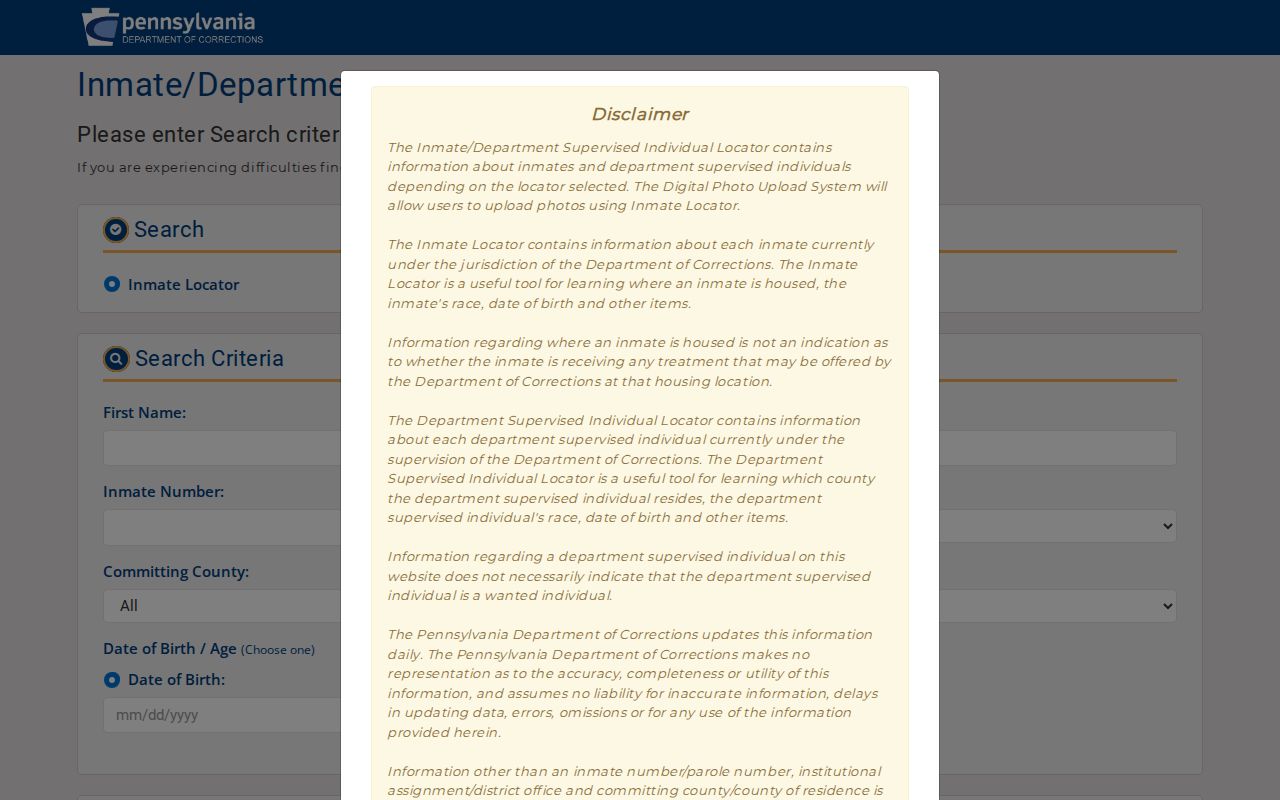
The interface supports a current-jurisdiction check, while calculated minimum and maximum dates still require court or corrections records.
Note: A supervised-individual release date confirms an SCI-to-supervision event, not the end of all parole or sentence obligations.
Find Lancaster Inmate Release Dates
The search sequence must follow jurisdiction. Gather the full legal name, date of birth, county PIN or DOC number, court docket number, and an approximate custody period. Those details reduce false matches and help an agency locate an existing calculation or release record without having to create a new report.
- For a Lancaster pretrial case, read both Magisterial District and Common Pleas dockets for bail, dismissal, sentencing, or transfer orders. Then call Lancaster County Prison at 717-299-7800 and use automated inmate information option #2.
- For a Lancaster county sentence, obtain the judgment of sentence and contact the prison and Lancaster County APPS. PA DOC does not calculate every county-jail sentence.
- For a state sentence, search both PA DOC locator modes. Ask DOC for the existing sentence calculation, commitment, or release record when the public fields do not answer the question.
- For state parole, distinguish the minimum eligibility date, Board review timing, a Board Action, and the actual release. The Lancaster state parole sub-office verifies current supervision rather than issuing general historical reports.
- For federal custody, use the BOP locator. A future BOP date is projected under federal law and can change, while “Released” or “Not in BOP Custody” only ends the BOP part of the custody map.
A narrow Pennsylvania DOC Right-to-Know request can seek an existing sentence-calculation record, commitment and release dates, release type or destination if recorded, and a discharge record. Send DOC requests to the Office of Chief Counsel, 1920 Technology Parkway, Mechanicsburg, PA 17050, or RA-docrighttoknow@pa.gov. Identify the person by DOC number and a focused date range.
Lancaster Minimum and Maximum Dates
Under 42 Pa.C.S. § 9756, a Pennsylvania sentencing court fixes a maximum and a minimum for an applicable sentence. The minimum generally cannot exceed one-half of the maximum. Pennsylvania DOC calculates sentence dates for people in its jurisdiction, while the Pennsylvania Parole Board makes parole decisions. The minimum opens the ordinary eligibility point. It does not compel the Board to grant parole.
Under 61 Pa.C.S. § 6137, the Board ordinarily cannot parole someone before the minimum. Life and death sentences are excluded from ordinary Board parole. A grant before the maximum permits the remaining balance to be served in the community under conditions. Required programs, evaluations, detainers, drug-screen rules, and Board conditions can still affect the contemplated transition.
The Pennsylvania Parole Board process page explains the minimum and maximum distinction and expressly rejects a general 85-percent requirement.
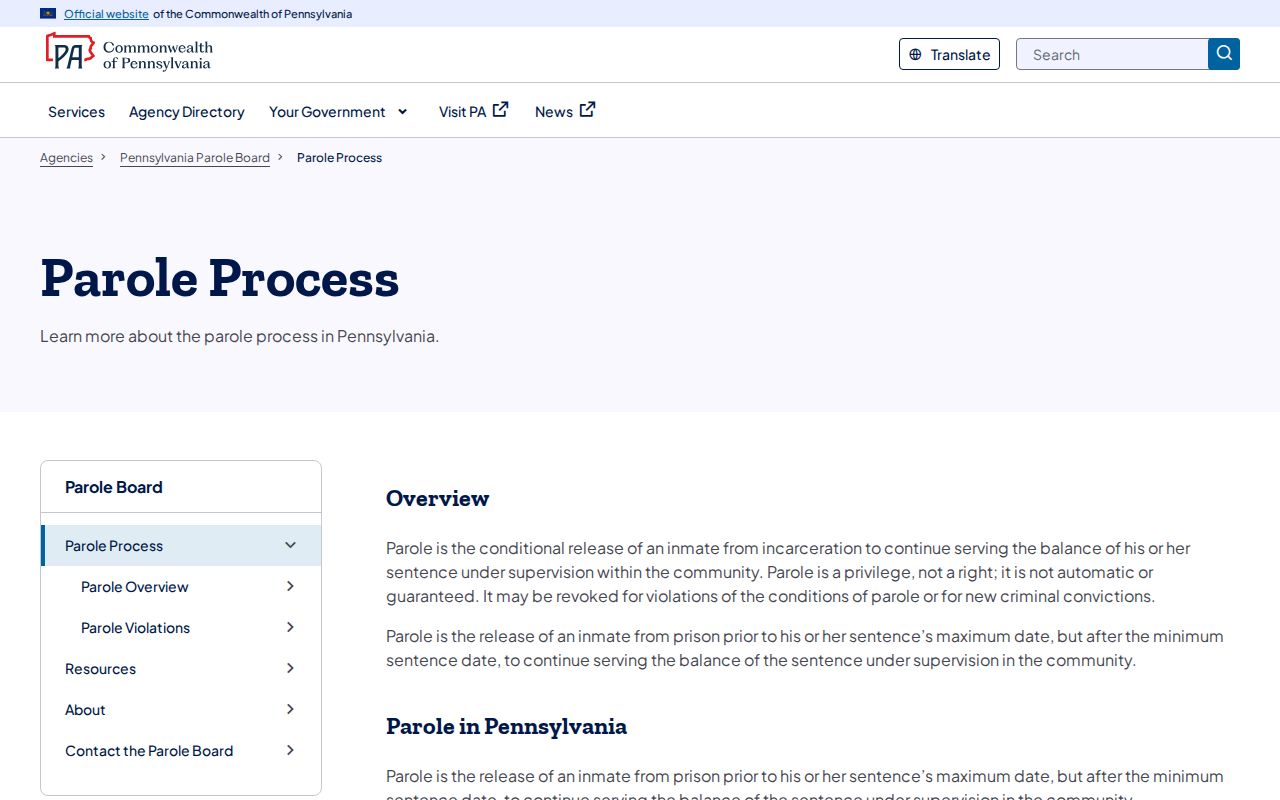
This official framework is more reliable than applying a rule borrowed from another state.
Lancaster RRRI Release Calculations
Pennsylvania has no general rule that every state inmate must serve 85 percent of the maximum before parole. No across-the-board 85-percent rule was verified for a Lancaster county-jail sentence either. The judgment, sentence credit, bail posture, detainers, county parole authority, and other orders control a county case. Broad percentage claims blur those facts.
The Recidivism Risk Reduction Incentive, or RRRI, is a narrower statutory program. For an eligible defendant, 61 Pa.C.S. § 4505 sets an alternative minimum at three-fourths of an ordinary minimum of three years or less. When the ordinary minimum is longer than three years, the RRRI minimum is five-sixths. The statute directs how consecutive terms are combined and partial days are rounded.
| Ordinary minimum | RRRI fraction if eligible | Illustration |
|---|---|---|
| Three years or less | Three-fourths | A two-year minimum yields an 18-month RRRI minimum |
| More than three years | Five-sixths | A six-year minimum yields a five-year RRRI minimum |
These examples explain arithmetic only. Under § 4506, release still requires continued eligibility and DOC certifications involving assessment, required programming, conduct, an adequate reentry plan, conditions, notice, and public-safety judgment. RRRI creates no right to parole. The fractions cannot be applied to every Lancaster sentence or treated as an actual release date.
A Lancaster court judgment must identify RRRI eligibility before the alternative framework can apply. DOC then tests continued eligibility and the required certifications. If the person does not qualify, loses eligibility, or lacks a required certification, the ordinary minimum and Board process remain controlling. The same caution applies when consecutive sentences are present because the statute directs aggregation. Adding fractions from separate terms by hand can produce a date that does not match the official calculation.
Note: Five-sixths is about 83.3 percent of a qualifying minimum, not 85 percent of every maximum sentence.
Why Lancaster Release Dates Change
A calculated date can move as the legal and corrections records change. Some changes correct the original calculation. Others arise from new conduct, new court action, or a separate custodian. The record should identify the reason rather than invite a guess.
| Factor | How it affects the date |
|---|---|
| Sentence credit correction | Changes credited custody time and may move the calculated minimum or maximum. |
| Amended or appellate order | Revises the sentence or sends the case back for further action. |
| Concurrent or consecutive terms | Changes how multiple sentences are combined. |
| Detainer or other hold | May prevent community release even when one custodial term permits it. |
| RRRI eligibility or certification | Can preserve or remove access to the alternative minimum process. |
| Parole refusal or review | Leaves the person in custody pending a later lawful action. |
| Recommitment or new sentence | Adds legal custody or requires a fresh calculation. |
A Board Action may name a review month. That is a point for reconsideration, not a release date. Misconduct, loss of program eligibility, escape or delinquency, and a parole violation can also alter the path. For a historical answer, combine the sentencing docket, DOC calculation, Board record, and actual release entry.
Detainers deserve special care. A detainer is a request or legal basis for another authority to hold or receive a person. Lancaster County Prison may finish its own authority and transfer the person to PA DOC, another county, federal custody, or immigration custody. The county event can be recorded as a release or transfer even though confinement continues. The next custodian's locator must be checked before calling the date a community release.
Confirm Lancaster Release Date Events
Use a prospective notification to supplement the formal records. PA SAVIN covers participating county jails, state prisons, and state parole in Pennsylvania. A person can be registered by exact name through VINELink, then tracked for a reported release, escape, or movement. A transfer alert does not mean release to the community. Complete registration details are available through the Lancaster VINELink release check.
For Lancaster County Prison, call the facility and inspect the court docket. A narrowly framed county records request can seek the named person's existing booking and release date and time, recorded disposition, and receiving agency category if maintained. For DOC custody, seek the existing calculation and final release record. For federal custody, confirm the BOP date and federal court event.
When sources conflict, keep each timestamp tied to its source. A docket may show when bail was posted or an order was signed. Prison staff may complete identity, property, account, and hold checks later. SAVIN records the custody update transmitted by the participating agency. The actual release entry maintained by the custodian is the best source for the physical event, while the court record explains the legal authority behind it.
Actual release may occur after a court entry while the custodian completes processing. A transfer can end one agency's custody without ending confinement. Final discharge may occur much later than physical release from a jail or SCI. The safest answer states which date was found, which agency created it, and exactly what that date proves.